



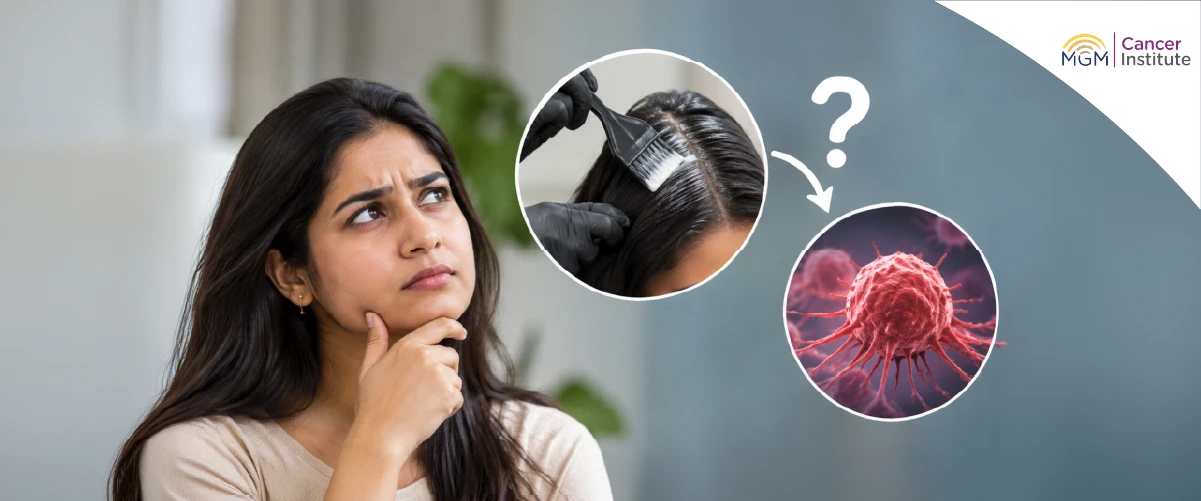
Can Hair Dye Increase Cancer Risk? Understanding the Facts
Hair colouring is a common way to cover grey hair or change your appearance. But have you ever wondered whether the chemicals in hair dye could increase your risk of cancer?
Some studies have explored a possible link between hair dye use and cancers such as breast cancer and bladder cancer. However, scientific findings remain mixed, and personal use of hair dye has not been established as a cause of cancer.
Let’s understand what research says about hair dye, its ingredients and potential health risks.
Does Hair Dye Cause Cancer?
There is currently no conclusive evidence that personal use of hair dye causes cancer. However, researchers continue to investigate the possible effects of long-term exposure to certain hair dye chemicals.
The International Agency for Research on Cancer (IARC) classifies occupational exposure as a hairdresser or barber as probably carcinogenic to humans (Group 2A). Personal use of hair colouring products is classified as Group 3, meaning the evidence is insufficient to classify its carcinogenicity.
This does not mean hair dye is proven completely safe or that it causes cancer.
What Are the Different Types of Hair Dye?
Hair colouring products are generally divided into three types:
1. Permanent Hair Dye
Permanent dyes use chemical reactions to change hair colour for a longer period. They are commonly used to cover grey hair and achieve lasting colour.
2. Semi-Permanent Hair Dye
These dyes deposit colour without the same chemical processing as permanent dyes. The colour gradually fades after several washes.
3. Temporary Hair Dye
Temporary dyes coat the hair surface and are usually removed after one or a few washes.
Different formulations contain different ingredients, so their potential health effects may vary.
What Chemicals in Hair Dye Raise Health Concerns?
Certain ingredients used in hair colouring products have received scientific attention.
- PPD (Para-Phenylenediamine): Commonly used in permanent hair dyes and known to cause allergic skin reactions in some people.
- Aromatic Amines: Certain compounds in this chemical group have raised concerns in cancer research.
- Hydrogen Peroxide: Used in permanent dyes to lighten hair pigment and develop colour.
The presence of these ingredients does not automatically mean that a hair dye product causes cancer. The potential effects depend on the specific chemical, formulation and exposure.
Can Hair Dye Increase the Risk of Breast or Bladder Cancer?
Some studies have investigated possible associations between hair dye use and breast cancer, bladder cancer and certain blood-related cancers.
However, findings have not been consistent.
Occupational exposure among hairdressers and barbers is different from personal hair dye use because salon professionals may handle chemical products regularly over many years.
Currently, personal use of modern hair colouring products has not been established as a cause of these cancers.
How to Reduce Exposure to Hair Dye Chemicals
Although the cancer risk associated with personal hair dye use remains uncertain, following basic precautions can help reduce unnecessary chemical exposure.
- Read product labels and ingredient lists before use.
- Follow the manufacturer’s application instructions.
- Perform the recommended allergy alert test.
- Wear protective gloves while applying hair dye.
- Use hair colouring products in a well-ventilated area.
- Avoid products that have previously caused allergic reactions.
- Rinse your scalp thoroughly after application.
These steps can help minimise exposure and reduce the likelihood of skin irritation.
When Should You Consult a Doctor?
If you experience itching, redness, swelling or skin irritation after using hair dye, seek medical advice if symptoms persist or worsen.
Severe allergic reactions involving breathing difficulties or throat swelling require immediate medical attention.
You should also consult a doctor if you notice unusual lumps, persistent swelling or unexplained symptoms. These symptoms do not necessarily indicate cancer, but they may need medical evaluation.
Conclusion
Although research continues to explore the possible link between hair dye and cancer, there is currently no conclusive evidence that personal hair dye use causes cancer. Understanding product ingredients, following safety instructions and staying informed can help you make informed decisions about hair colouring.
Rather than worrying about unproven claims, focus on evidence-based information, take necessary precautions and consult a healthcare professional if you have concerns about your health.
DOCTOR DETAILS:
Dr. M. A. Raja
Director and Senior Consultant
Medical Oncology
Frequently Asked Questions
Some studies have reported possible associations between hair dye use and certain cancers. However, personal use has not been established as a cause of cancer.
Current scientific evidence does not establish that permanent hair dye causes cancer. Researchers continue to investigate its possible long-term effects.
Some older hair dye formulations raised cancer concerns because of certain chemical ingredients. However, using black hair dye has not been conclusively established as a cause of cancer.
Research findings are mixed. Some studies have reported associations, while others have found no significant increase in overall cancer risk.
These products use different formulations. However, there is insufficient evidence to conclude that all semi-permanent dyes are completely safe.
Contact Us
Visiting Hours
OPEN 24 hours 7 days a week.
OPD Timings : Monday to Saturday
( 9:00 AM to 5:30 PM )
Appointments
Visit the hospital
MGM Cancer Institute
No 119 & 121, Nelson Manickam Road, Raajeswari Street, Rajaram Mehta Nagar,
Aminjikarai, Chennai – 600029



At MGM Cancer Institute, we believe in curing the fear of cancer first. We understand that battling cancer is not just a physical fight, but a mental and emotional one as well. Our dedicated team is committed to providing exceptional healthcare that improves your overall well-being and eases the anxiety that comes with cancer. With a 150-bed facility in the heart of your city, we are here to support you every step of the way.
© MGM Cancer Institute. All Rights Reserved. Last updated on 17-06-2026.
Part of MGM HEALTHCARE PRIVATE LIMITED