



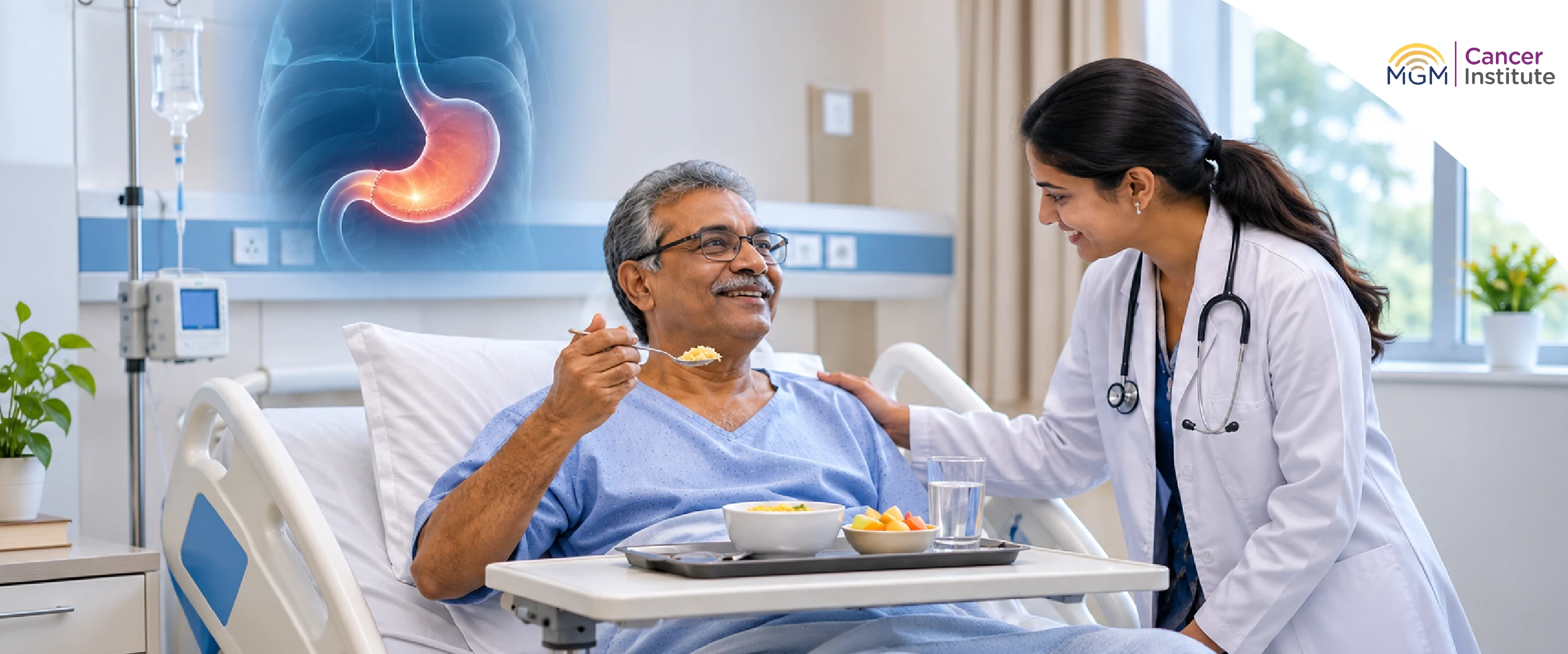
Can I Eat Normally After Stomach Cancer Surgery?
Yes, many people can eat a variety of foods after stomach cancer surgery. However, meal sizes, food choices and eating habits may change, especially after total stomach removal. Eating smaller, frequent meals, choosing protein-rich foods and following a dietitian’s advice can support recovery and nutritional health.
What Happens to Your Stomach After Cancer Surgery?
Stomach cancer surgery, also called gastrectomy, involves removing part or all of the stomach.
- Partial gastrectomy: The affected part of the stomach is removed.
- Total gastrectomy: The entire stomach is removed, and the food pipe is connected to the small intestine.
After surgery, food moves through your digestive system differently. You may feel full faster and need smaller meals.
How Does Eating Change After Stomach Cancer Surgery?
Yes, many patients can enjoy a variety of foods after stomach cancer surgery. However, portion sizes and eating habits may change.
Your digestive system needs time to adjust. Initially, you may follow a liquid or soft-food diet before gradually introducing solid foods, as advised by your medical team.
5 Eating Tips After Stomach Cancer Surgery
1. Eat Small, Frequent Meals
Instead of three large meals, try five to six smaller meals daily if recommended by your dietitian. This helps manage early fullness and improve food intake.
2. Eat Slowly and Chew Well
Take smaller bites and chew food thoroughly. Eating slowly may help reduce bloating, nausea and digestive discomfort.
3. Include Protein-Rich Foods
Protein supports healing and muscle strength. Suitable options may include eggs, fish, chicken, paneer, curd and well-cooked lentils.
4. Limit Sugary and Fatty Foods
Some patients develop dumping syndrome, where food moves too quickly into the small intestine. Symptoms may include abdominal cramps, diarrhoea, sweating, dizziness and nausea.
Smaller meals and limiting added sugars may help manage symptoms.
5. Manage Fluid Intake
Drinking large amounts of water with meals may make some patients feel full. Your dietitian may recommend drinking fluids between meals. Maintain adequate daily hydration.
What Foods Can You Eat After Stomach Cancer Surgery?
Depending on your recovery and tolerance, your diet may include:
- Grains: Soft rice, idli and porridge.
- Protein: Eggs, fish, chicken and paneer.
- Dairy: Curd, yoghurt and milk if tolerated.
- Vegetables: Well-cooked carrots and pumpkin.
- Fruits: Soft banana and other tolerated fruits.
Introduce foods gradually based on your medical team’s advice.
Will I Lose Weight After Stomach Cancer Surgery?
Weight loss is common after stomach cancer surgery because of reduced appetite, smaller meal portions and changes in digestion.
Eating nutrient-dense meals with adequate calories and protein can help maintain weight. Consult your doctor if you experience continued or unexplained weight loss.
Do I Need Vitamins After Stomach Removal?
Some patients need long-term vitamin and mineral supplements, particularly after total gastrectomy.
Common nutritional concerns include:
- Vitamin B12 deficiency.
- Iron deficiency.
- Low calcium levels.
Your doctor may recommend blood tests, vitamin B12 injections or other supplements depending on your needs.
Foods you may need to limit after surgery
Not everyone has food problems. However some people may find it difficult to tolerate:
- sugary foods and drinks
- Fried and oily foods
- Large meals
- Very spicy foods
- Foods that cause gas or bloating
- Tough or hard‑to‑digest foods during early recovery
You do not have to avoid all these foods forever. Your diet can be adjusted as your body recovers. Your tolerance improves.
When Should You Contact Your Doctor?
Seek medical advice if you experience:
- Frequent vomiting.
- Difficulty swallowing.
- Persistent diarrhoea.
- Severe abdominal pain.
- Difficulty eating or drinking.
- Continued weight loss.
- Signs of dehydration.
Supporting Your Recovery After Stomach Cancer Surgery
Stomach cancer surgery can change your eating habits, but it does not mean you have to stop enjoying food.
With appropriate dietary adjustments, nutritional monitoring and regular follow-up care, many patients learn to manage these changes.
At MGM Cancer Institute, Chennai, the Surgical Oncology team supports patients through cancer treatment and recovery.
Consult our Surgical Oncology team to understand your treatment, recovery and nutritional needs.
Doctor details:
Dr. Manikandan Venkatasubramaniyan
Senior Consultant
Surgical Oncology
Frequently Asked Questions
Yes. Soft, well-cooked rice can be included once your doctor allows solid foods. Start with small portions.
Some patients tolerate milk, while others experience bloating or diarrhoea. Your dietitian can suggest alternatives.
Yes. Chicken and fish provide protein and may be included based on your recovery and food tolerance.
Yes. You can still experience hunger, although your appetite and fullness signals may change.
Recovery varies. Some patients adjust within weeks, while others need several months to tolerate a wider variety of foods.
Contact Us
Visiting Hours
OPEN 24 hours 7 days a week.
OPD Timings : Monday to Saturday
( 9:00 AM to 5:30 PM )
Appointments
Visit the hospital
MGM Cancer Institute
No 119 & 121, Nelson Manickam Road, Raajeswari Street, Rajaram Mehta Nagar,
Aminjikarai, Chennai – 600029



At MGM Cancer Institute, we believe in curing the fear of cancer first. We understand that battling cancer is not just a physical fight, but a mental and emotional one as well. Our dedicated team is committed to providing exceptional healthcare that improves your overall well-being and eases the anxiety that comes with cancer. With a 150-bed facility in the heart of your city, we are here to support you every step of the way.
© MGM Cancer Institute. All Rights Reserved. Last updated on 17-06-2026.
Part of MGM HEALTHCARE PRIVATE LIMITED