


Cancer Stages And TNM System: Key Insights for Early Detection
The word cancer can be frightening, but not all cancers behave the same. Some cancers are slow-growing and highly treatable, while others progress rapidly. This expected course and outcome of cancer is called prognosis.
Cancer prognosis mainly depends on two key factors:
- Tumour biology
- Stage of cancer at diagnosis
With an expert team, early diagnosis, and personalized treatment, cancer outcomes can be significantly improved.
What Does Cancer Biology Mean?
Cancer biology refers to how aggressive a tumour is at the cellular and genetic level. Cancer growth is driven by genetic mutations, known as driver mutations, which fuel uncontrolled cell division.
When effective targeted therapy is available for a specific mutation, cancer can often be controlled even in advanced stages. A classic example is Imatinib in Chronic Myeloid Leukemia (CML).
Modern tools like Next Generation Sequencing (NGS) help identify actionable mutations and guide precision cancer treatment, including targeted therapy and immunotherapy.
In cancer prognosis, biology is king. Cancers with favourable biology may remain controlled for decades even at Stage IV while aggressive cancers may progress despite early treatment.
What Does Cancer Stage Mean?
Cancer staging describes how far the cancer has spread in the body. It helps doctors:
- Assess disease severity and prognosis
- Decide the best treatment approach (surgery, chemotherapy, radiation, or combinations)
- Plan the correct treatment sequence
- Ensure uniform treatment protocols worldwide
4 Stages of Cancer and Their Significance
Most cancers are classified using the AJCC staging system (9th edition effective from 2026), which categorizes cancer into four stages:
- Stage I: Cancer confined to the organ of origin
- Stage II: Larger tumour or limited lymph node involvement
- Stage III: Spread to surrounding tissues or multiple lymph nodes
- Stage IV: Spread to distant organs (metastatic cancer)
Staging allows accurate treatment planning and outcome prediction.
How Is Cancer Stage Calculated? (TNM System)
Cancer stage is determined using three components:
T – Tumour Size & Local Spread
Example: Tongue Cancer
- T1: Tumour < 2 cm
- T2: Tumour 2–4 cm
- T3: Tumour > 4 cm or depth > 1 cm
- T4: Invasion into deep tongue muscles or jawbone
N – Lymph Node Involvement
- N1: Single lymph node < 3 cm
- N2: Multiple nodes or size 3–6 cm
- N3: Node > 6 cm
M – Metastasis
- M0: No distant spread
- M1: Distant metastasis present
Example: A 3 cm tongue tumour with a single 2 cm lymph node is T2N1M0 – Stage III cancer.
Tests Used to Determine Cancer Stage
- Biopsy: Confirms cancer diagnosis
- Imaging scans: PET-CT, CT scan, or MRI to assess size and spread
PET-CT is the most commonly used scan for accurate cancer staging.
Why Early Cancer Detection Matters
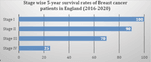
Early-stage cancer offers the highest chance of cure. Survival rates drop significantly as cancer advances.
- Stage I breast cancer: Nearly 100% survival
- Stage IV breast cancer: Around 25% survival
In many cancers, late-stage diagnosis may reduce survival to less than one year. Outcomes vary based on tumour biology, reinforcing the importance of early diagnosis and timely treatment.

What can be done to identify cancer in the early stage?
Routine cancer screening is the most effective way to detect cancer early.
Recommended screenings include:
- Oral cavity examination from age 30
- Mammogram and Pap smear for women (40–74 years)
- PSA testing for men above 60 years
- Periodic blood tests and ultrasound scans
Do not ignore symptoms lasting more than 3–4 weeks, such as:
- Non-healing ulcers
- New lumps or swellings
- Persistent pain
- Abnormal bleeding
How to prevent getting cancer completely?
While cancer cannot be fully prevented, healthy lifestyle choices can significantly reduce cancer risk:
- Eat a balanced, plant-rich diet
- Avoid tobacco and limit alcohol
- Exercise at least 30 minutes daily
- Manage stress through yoga, meditation, and adequate sleep
These habits strengthen immunity and reduce the risk of abnormal cell growth.
Conclusion
Cancer stages indicate how far the disease has progressed, but outcomes depend on both tumour biology and stage at diagnosis. Advances in treatment have improved survival, yet early detection and timely consultation remain the most important factors for cure and long-term control. Prompt evaluation of symptoms and regular screening can make a critical difference.
Faq
Yes. The risk is low in Stage I but increases in Stages II and III. Regular follow-up and healthy habits help reduce recurrence.
No. Treatments like targeted therapy and immunotherapy can control cancer for long periods. In some cases, surgery or radiation may also be possible.
Cancer progression varies due to genetics, tumour biology, lifestyle, age, and treatment response.
Yes. Screening can detect cancer early, often before symptoms and early-detected cancers are usually curable.
Yes. Good nutrition, regular activity, proper sleep, and stress management improve strength and treatment tolerance.
Contact Us
Visiting Hours
OPEN 24 hours 7 days a week.
OPD Timings : Monday to Saturday
( 9:00 AM to 5:30 PM )
Appointments
Emergency
Visit the hospital
MGM Cancer Institute
No 119 & 121, Nelson Manickam Road, Raajeswari Street, Rajaram Mehta Nagar,
Aminjikarai, Chennai – 600029