



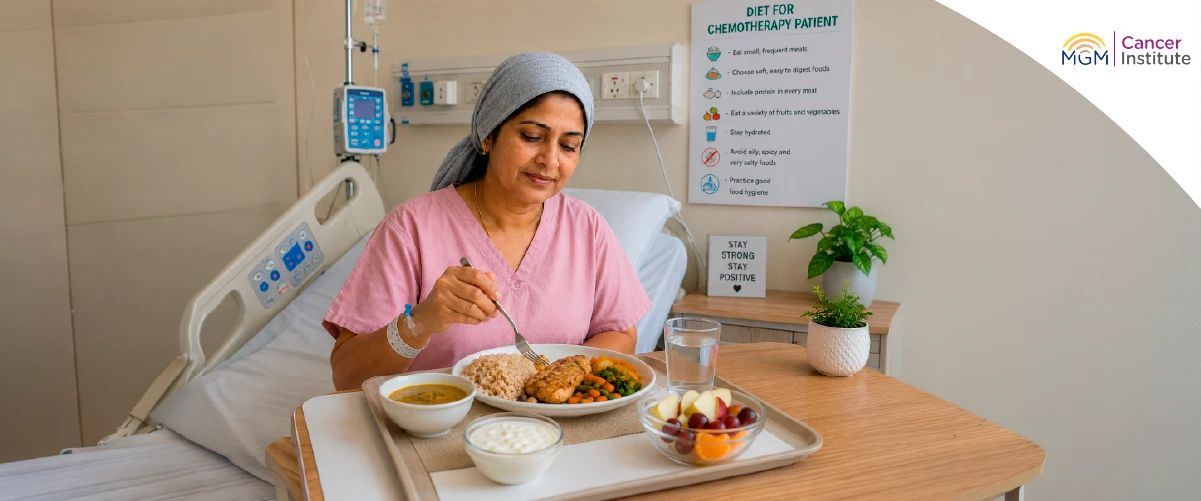
Chemotherapy Diet Chart: Foods to Eat, Avoid And Recover
Chemotherapy is a powerful treatment used to destroy cancer cells, but it can also affect your body in many ways, especially your appetite, digestion, and energy levels. That’s why following the right diet during chemotherapy is not just helpful, it’s essential.
A balanced diet for chemotherapy patients includes high-protein foods, fresh fruits and vegetables, whole grains, and plenty of fluids. Eating small, frequent meals and avoiding raw or processed foods can help manage side effects and support faster recovery.
Why Diet is Important During Chemotherapy
How Chemotherapy Affects the Body
Chemotherapy targets fast-growing cancer cells, but it can also impact healthy cells. This often leads to:
- Fatigue and weakness
- Nausea and vomiting
- Loss of appetite
- Changes in taste and smell
- Lower immunity
Role of Nutrition in Recovery
Good nutrition plays a key role in:
- Repairing damaged tissues
- Maintaining body weight and strength
- Improving treatment tolerance
- Reducing infection risks
Best Foods for Chemotherapy Patients
High-Protein Foods for Strength
Protein is essential for healing and recovery.
- Eggs, chicken, fish
- Paneer, tofu, lentils, Soya beans
- curd, milk
Tip: Add protein to every meal to prevent muscle loss.
Energy-Boosting Foods
Chemotherapy can drain your energy, so calorie-dense foods help:
- Whole grains like oats, brown rice, millets
- Healthy fats like nuts, seeds, peanut butter, fish
- Avocados and olive oil
Fruits & Vegetables for Immunity
Packed with vitamins and antioxidants:
- Spinach, carrots, broccoli
- Fruits like oranges, apples, pomegranate, sweet lime , banana
- Always wash thoroughly and peel when possible.
Hydrating Foods & Fluids
Staying hydrated is critical:
- Fresh Coconut water
- Fresh soups and broths
- Herbal teas and buttermilk
Protein plays a key role in recovery learn more in our guide on https://mgmcancerinstitute.in/blog/best-food-for-cancer-patients/
Diet Chart Foods to Avoid After Chemotherapy
Risky Foods That Increase Infection
- Raw or undercooked meat and eggs
- Unpasteurized milk and dairy
- Street food or unhygienic meals
- Left overs
Foods That Trigger Side Effects
- Spicy, oily, and fried foods
- Highly processed snacks
- Carbonated drinks
Sugar & Junk Food Risks
- Excess sugar may weaken immunity
- Leads to sudden energy crashes
Diet Based on Chemotherapy Side Effects
For Nausea & Vomiting
- Eat small, frequent meals
- Try ginger tea or dry crackers
- Avoid strong smells
For Loss of Appetite
- Choose high-calorie smoothies
- Eat favorite foods in small portions
- Set meal reminders in small frequent intervals
For Mouth Sores
- Eat soft foods like curd, khichdi, mashed vegetables, buttermilk
- Avoid spicy, acidic, or rough-textured foods
For Diarrhea or Constipation
- Diarrhea: Choose low-fiber foods like rice and bananas, mashed potatoes
- Constipation: Add fiber-rich foods like oats and vegetables
Diet Chart For Chemotherapy Patients
Breakfast
- Oats porridge /Dhal khichdi
- Idli with sambar/ Egg whites or tofu/paneer
- Banana smoothie with milk
Lunch
- Brown rice + dal + cooked vegetables+ egg/paneer
- Chapati + grilled chicken or paneer+steamed veggies
Dinner
- Vegetable khichdi + scrambled eggs/tofu
- Clear soup with toast
Healthy Snacks
- Nuts and seeds
- Yogurt or curd
- Fresh fruit bowls/ sundal/ sweet potato
Nutrition Tips for Chemotherapy Patients
Vegetarian Diet Plan
- Include paneer, tofu, lentils, chickpeas, soya
- Combine grains + pulses for complete protein
High-Calorie Diet for Weight Loss Patients
- Add nut butters, ghee, milkshakes
- Include calorie-dense snacks
Neutropenic Diet (Low-Bacteria Diet)
- Eat freshly cooked food
- Avoid raw salads and outside food
- Maintain strict hygiene
Supplements & Nutritional Support
When Supplements Are Needed
- Protein powders when advised by dietian or physician
- Multivitamins if deficiency exists
Risks of Self-Medication
Taking supplements without medical advice may:
- Interfere with chemotherapy drugs
- Cause unwanted side effects
Tips for Caregivers & Family Members
Encouraging Healthy Eating
- Offer small, frequent meals
- Be patient with taste changes
Food Safety & Hygiene
- Wash fruits and vegetables properly
- Cook food thoroughly to a proper temperature Refrigerate perishable, prepared foods within 2hrs or sooner
When to Consult a Doctor or Dietitian
Seek expert help if:
- Rapid or severe weight loss occurs
- Persistent vomiting or diarrhea
- Difficulty eating or swallowing
Final Thoughts
Managing your diet After chemotherapy can feel overwhelming, but small, mindful changes can make a big difference. Focus on nourishing your body with the right foods, staying hydrated, and listening to your body’s needs.
A well-planned diet not only helps reduce treatment side effects but also improves your strength, immunity, and overall quality of life during cancer care.
Consult an oncology dietitian or healthcare professional for a personalized diet plan tailored to your treatment and recovery needs.
Frequently Asked Questions
A balanced diet rich in protein, whole grains, fruits, vegetables, and fluids helps support recovery and reduce side effects.
Yes, fruits are beneficial. Always wash thoroughly and peel to reduce infection risk/ opt for thick skinned fruits to reduce the risk of infection
Foods rich in vitamins and antioxidants such as fruits, vegetables, nuts, and seeds help boost immunity.
Avoid raw foods, processed items, spicy foods, and unhygienic meals and left overs to reduce complications.
Small, frequent meals (6-7 times a day) are recommended to maintain energy levels.
Contact Us
Visiting Hours
OPEN 24 hours 7 days a week.
OPD Timings : Monday to Saturday
( 9:00 AM to 5:30 PM )
Appointments
Visit the hospital
MGM Cancer Institute
No 119 & 121, Nelson Manickam Road, Raajeswari Street, Rajaram Mehta Nagar,
Aminjikarai, Chennai – 600029



At MGM Cancer Institute, we believe in curing the fear of cancer first. We understand that battling cancer is not just a physical fight, but a mental and emotional one as well. Our dedicated team is committed to providing exceptional healthcare that improves your overall well-being and eases the anxiety that comes with cancer. With a 150-bed facility in the heart of your city, we are here to support you every step of the way.
© MGM Cancer Institute. All Rights Reserved. Last updated on 17-06-2026.
Part of MGM HEALTHCARE PRIVATE LIMITED