



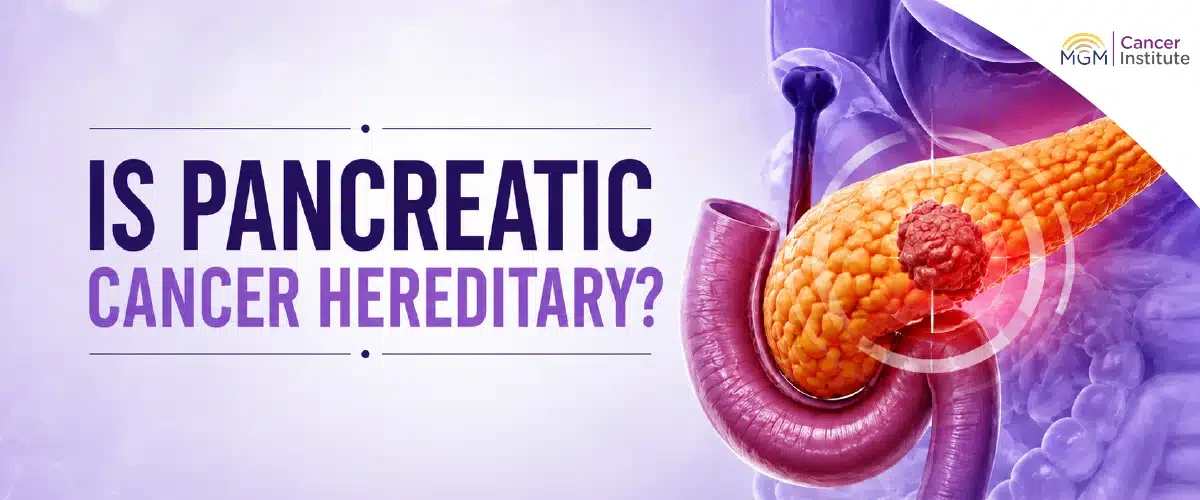
Is Pancreatic Cancer Hereditary? Family History & Genetic Risk
Myth: Pancreatic cancer is always passed down from family.
Fact: Most pancreatic cancers are not passed down from family. While some genetic changes that are inherited from parents can increase a person’s risk, most pancreatic cancers happen because of changes that occur during a person’s life.
Pancreatic cancer is often linked to family history, which makes people wonder if the disease is something that is passed from one generation to another. Understanding the difference between inherited risk, family history and cancer that happens by chance can help people make decisions about their health. Pancreatic cancer is a disease and it is good to know what causes it.
What Does Inherited Mean?
An inherited cancer is linked to a change that is passed from a parent to a child. These inherited genetic changes can increase a person’s chance of developing cancers. Pancreatic cancer is one of them.
In cancer inherited genetic changes are thought to account for a small number of cases. This means that most pancreatic cancers do not happen because a person inherited a change from their parents. Pancreatic cancer is a disease and there are many factors that contribute to its development.
It is also important to understand that inheriting a change that increases cancer risk does not mean a person will definitely develop pancreatic cancer. It means that their risk may be higher than that of someone without the change. Pancreatic cancer is a risk that can be managed with the information and care.
What Causes Pancreatic Cancers?
Most pancreatic cancers are linked to changes that happen during a person’s life. These are known as acquired changes. Pancreatic cancer is often caused by a combination of environmental factors.
Some of these changes may be linked to risk factors such as smoking while others can happen naturally as cells divide. In cases the exact reason these genetic changes happen is not known. Pancreatic cancer is a disease that can affect anyone regardless of their family history.
This means that a person can develop cancer even when nobody else in their family has had the disease. Pancreatic cancer is a disease that requires prompt medical attention.
When Can Pancreatic Cancer Be Passed Down From Family?
Certain inherited genetic conditions can increase the risk of cancer. These include changes involving:
- BRCA1
- BRCA2
- PALB2
- ATM
- CDKN2A
- STK11
Certain inherited conditions such as Lynch syndrome and hereditary pancreatitis can also be linked to an increased risk. Pancreatic cancer is a disease that can be managed with care and support.
These genetic conditions may increase the risk of cancers as well. Therefore understanding the pattern of cancer within a family is important when assessing inherited risk. Pancreatic cancer is a disease that affects not the individual but also their family and loved ones.
Does Having a Family History Mean You Will Develop Pancreatic Cancer?
No.
Having a family history can increase the risk of cancer but it does not mean that a person will definitely develop the disease. At the time many people diagnosed with pancreatic cancer do not have a known family history. Pancreatic cancer is a disease that can be unpredictable and unexpected.
Doctors may pay attention when:
- Several close relatives have had pancreatic cancer
- Cancer has occurred at a younger age than expected
- Pancreatic cancer occurs alongside other cancers that can be linked to inherited cancer syndromes
Pancreatic cancer is a disease that requires monitoring and management.
Should You Consider Genetic Testing?
Genetic testing may be recommended for people diagnosed with cancer and may also be considered for individuals whose personal or family history suggests a possible inherited cancer syndrome. Genetic testing is a tool that can help identify individuals who’re at high risk of developing pancreatic cancer.
Genetic counselling can help:
- Determine whether testing is appropriate.
- Explain what the results could mean for the individual and their family.
Pancreatic cancer is a disease that can be managed with information and care.
For people identified as having a risk of pancreatic cancer doctors may recommend specialised surveillance using methods such as:
- MRI
- Magnetic resonance cholangiopancreatography
- Endoscopic ultrasound
These tests are generally not recommended as screening for people at average risk. Pancreatic cancer is a disease that requires monitoring and management.
Understanding Your Family History Matters
Knowing:
- Which relatives have had cancer
- What type of cancer they had
- The age at which they were diagnosed
can provide information when assessing inherited cancer risk. Family history is a factor in determining an individual’s risk of developing pancreatic cancer.
If you have close relatives with pancreatic cancer or a combination of pancreatic and other cancers in your family, discussing your family history with an oncologist or genetic counsellor can help determine whether further evaluation is appropriate. Pancreatic cancer is a disease that can be managed with care and support.
At MGM Cancer Institute
At MGM Cancer Institute understanding your cancer risk is an important part of personalised cancer care. If you have a family history of pancreatic cancer or other cancers our specialists can help assess your risk and determine whether genetic counselling, genetic testing or closer surveillance may be appropriate. Pancreatic cancer is a disease that requires medical attention.
Speaking to a specialist can help you understand what it means for you and your family. Pancreatic cancer is a disease that affects not the individual but also their family and loved ones.
The Bottom Line
Pancreatic cancer is not always passed down from family. Only a small number of cancers are linked to inherited genetic changes while most happen because of genetic changes that occur during a person’s life. Pancreatic cancer is a disease that requires prompt medical attention.
Having a family history does not mean that cancer is inevitable. Similarly having no family history does not completely eliminate the possibility of developing cancer. Pancreatic cancer is a disease that can be unpredictable and unexpected.
Knowing your family history, understanding your risk and speaking with a specialist when there is a concern can help you make decisions about your health. Pancreatic cancer is a disease that can be managed with information and care.
Know your family history. Know your risk. Talk to a specialist when in doubt.
DOCTOR DETAILS:
Dr. S. Srivishnu
Consultant
Surgical Oncology
Frequently Asked Questions
Most pancreatic cancers are not hereditary. Only a small proportion are linked to inherited genetic changes passed from parents to children.
Yes. Having close relatives with pancreatic cancer can increase a person’s risk, particularly when multiple family members are affected.
No. A family history can increase risk, but it does not mean that a person will definitely develop pancreatic cancer.
Inherited changes involving genes such as BRCA1, BRCA2, PALB2, ATM, CDKN2A and STK11 can be associated with an increased risk. Lynch syndrome and hereditary pancreatitis can also increase risk.
Yes. Many people diagnosed with pancreatic cancer do not have a known family history of the disease.
Contact Us
Visiting Hours
OPEN 24 hours 7 days a week.
OPD Timings : Monday to Saturday
( 9:00 AM to 5:30 PM )
Appointments
Visit the hospital
MGM Cancer Institute
No 119 & 121, Nelson Manickam Road, Raajeswari Street, Rajaram Mehta Nagar,
Aminjikarai, Chennai – 600029



At MGM Cancer Institute, we believe in curing the fear of cancer first. We understand that battling cancer is not just a physical fight, but a mental and emotional one as well. Our dedicated team is committed to providing exceptional healthcare that improves your overall well-being and eases the anxiety that comes with cancer. With a 150-bed facility in the heart of your city, we are here to support you every step of the way.
© MGM Cancer Institute. All Rights Reserved. Last updated on 17-06-2026.
Part of MGM HEALTHCARE PRIVATE LIMITED