



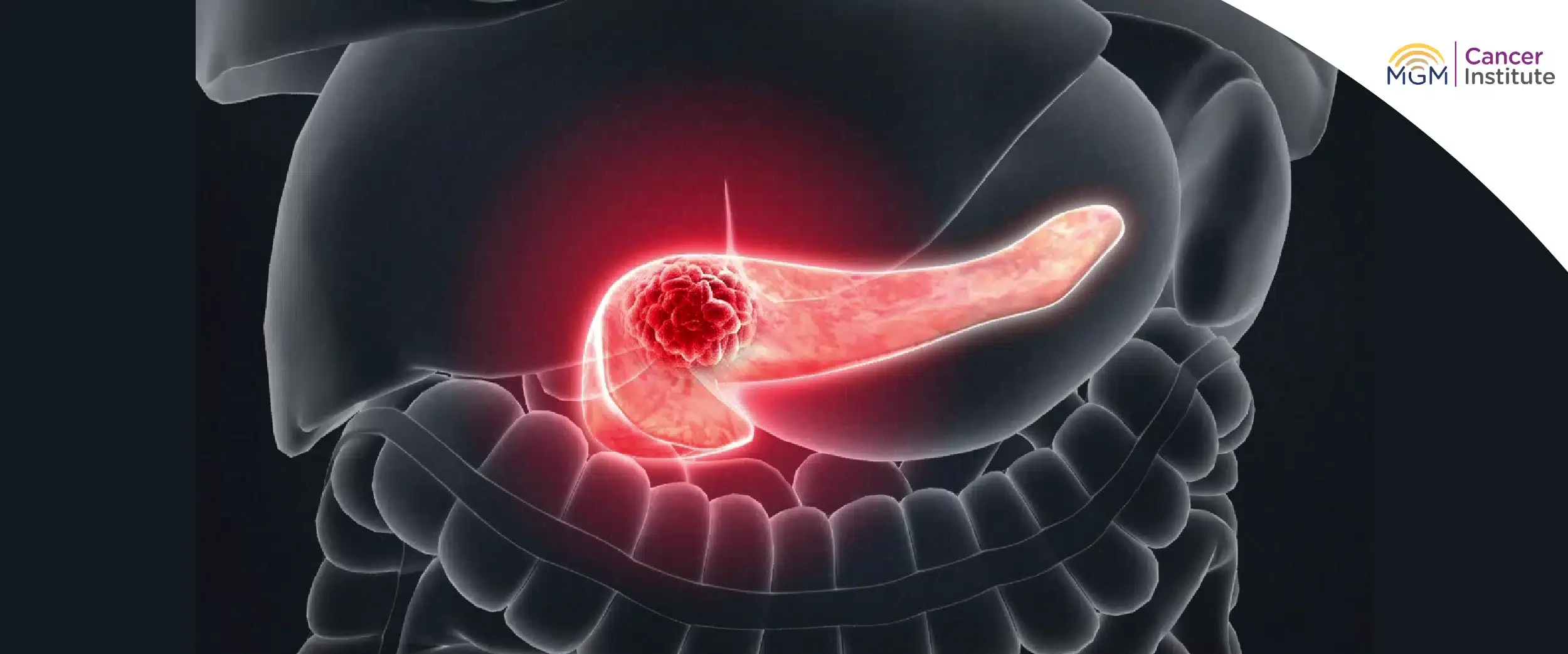
Pancreatic Cancer Awareness: Early Warning Signs You Shouldn’t Ignore
Pancreatic cancer is difficult to detect early because its most common type, pancreatic ductal adenocarcinoma (PDAC), often mimics common issues like indigestion, acidity, or mild blood sugar changes. These early signs are frequently overlooked, allowing the disease to progress silently. If symptoms persist or feel unusual, early medical evaluation is essential for timely diagnosis and better outcomes.
What is Pancreatic Cancer?
Pancreatic cancer occurs when abnormal cells in the pancreas grow uncontrollably and form a tumor. The pancreas plays a vital role in digestion and blood sugar regulation.
Understanding the Pancreas and Cancer Types
The pancreas plays two important roles in the body: helping to digest food and regulating blood sugar. Pancreatic cancers mainly appear in two forms.
1. Pancreatic Ductal Adenocarcinoma (PDAC)
- Most common type (over 90%)
- Aggressive and fast-growing
2. Pancreatic Neuroendocrine Tumours (PNETs)
- Less common
- Slower-growing and better prognosis
Pancreatic cancer is medically classified under ICD-10: C25.
Pancreatic Cancer Causes and Risk Factors
Many lifestyle habits and medical conditions can increase the risk of pancreatic cancer. These include
- Smoking
- Frequent alcohol use
- Obesity
- Chronic pancreatitis
- Long-term diabetes
- Exposure to harmful chemicals
Some people may also have genetic risk factors such as BRCA or MMR gene mutations, although hereditary cases are less common.
Early Symptoms of Pancreatic Cancer
Early signs are often mild and easily ignored:
- Persistent bloating or indigestion
- Unexplained weight loss
- Loss of appetite
- New-onset diabetes
- Nausea
If symptoms persist beyond a few weeks, early medical evaluation is essential.
Why Early Diagnosis Matters
Even a small tumour of three to four centimetres can be harmful because of the pancreas’s deep position and its closeness to major blood vessels. This makes pancreatic cancer surgery a real possibility only in the early stages. PDAC is challenging to treat because it
- sits in a sensitive location surrounded by vital arteries and veins
- shows limited response to chemotherapy, targeted therapy, immunotherapy and radiation therapy
- spreads quickly along nerves and blood vessels
For many patients, early surgery gives the best chance of long-term survival. When pancreatic cancer becomes advanced, survival rates drop sharply.
Pancreatic Cancer survival rates
Pancreatic cancer is not one of India’s most common cancers, but it has a high mortality rate because people usually discover it late.
According to GLOBOCAN 2022
- India records around 13,700 new PDAC cases every year
- It ranks 23rd in incidence.
- It ranks 18th in cancer-related deaths.
Improving Early Detection and Awareness
Early detection of pancreatic cancer can be improved by:
- Regular health check-ups
- Awareness of subtle symptoms
- Healthy lifestyle choices
- Timely diagnostic imaging
- Genetic screening for high-risk individuals
Conclusion: Awareness Can Save Lives
Pancreatic cancer grows quietly, but early recognition can make a big difference. Being aware of symptoms and regular check ups can help people get treatment at the right time.
This Pancreatic Cancer Awareness Month, let us encourage early evaluation and protect more lives. For appointments, call +91 44 4251 5151.
Read also Lung Cancer Awareness Month
Frequently Asked Questions (FAQ)
Pancreatic cancer is a disease where abnormal cells grow in the pancreas, affecting its ability to produce digestive enzymes and insulin. Raising pancreatic cancer awareness helps people recognize early symptoms and seek timely medical care.
Common pancreatic cancer symptoms include unexplained weight loss, jaundice, abdominal or back pain, indigestion, and changes in blood sugar. Early recognition is key to effective treatment and better outcomes.
Diagnosis involves imaging tests like CT scans, MRI, and blood tests. Early detection allows doctors to plan effective pancreatic cancer treatment in Chennai or other specialized centers, improving survival chances.
Progression varies depending on the type. Pancreatic Neuroendocrine Tumors (PNETs) grow slowly, while Pancreatic Ductal Adenocarcinoma (PDAC) can be aggressive. Recognizing early pancreatic cancer symptoms is crucial for timely intervention.
Life expectancy depends on the stage and overall health. Early detection improves survival, while advanced stages have lower rates. Specialized care, like pancreatic cancer treatment in Chennai, can help manage the disease.
Contact Us
Visiting Hours
OPEN 24 hours 7 days a week.
OPD Timings : Monday to Saturday
( 9:00 AM to 5:30 PM )
Appointments
Emergency
Visit the hospital
MGM Cancer Institute
No 119 & 121, Nelson Manickam Road, Raajeswari Street, Rajaram Mehta Nagar,
Aminjikarai, Chennai – 600029



At MGM Cancer Institute, we believe in curing the fear of cancer first. We understand that battling cancer is not just a physical fight, but a mental and emotional one as well. Our dedicated team is committed to providing exceptional healthcare that improves your overall well-being and eases the anxiety that comes with cancer. With a 150-bed facility in the heart of your city, we are here to support you every step of the way.
© MGM Cancer Institute. All Rights Reserved. Last updated on 20-01-2025.