


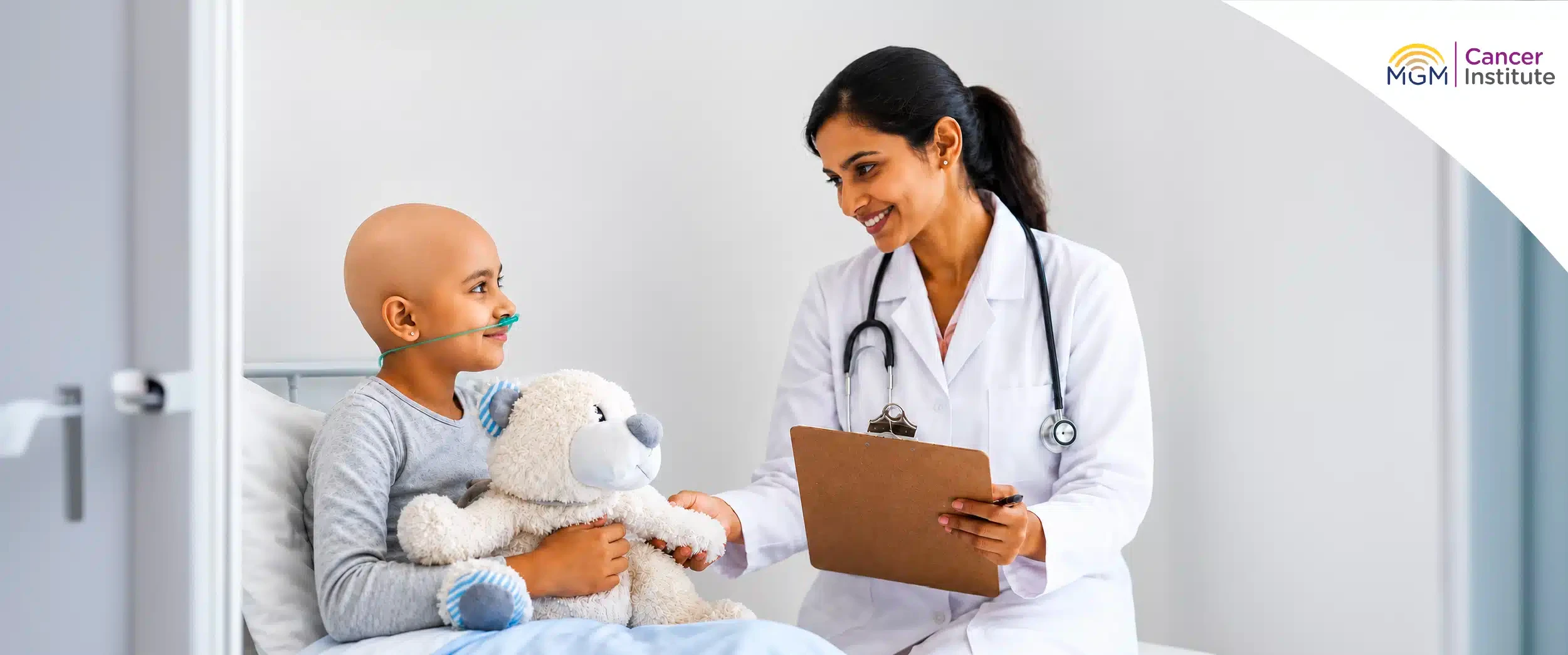
Childhood Cancer Symptoms And Types in Children: Early Signs Every Parent Should Know
Childhood cancer refers to cancers that occur in children and teenagers. The most common types include leukemia, brain tumors, lymphoma, neuroblastoma, Wilms tumour, and bone cancer. Early signs of childhood cancer may include persistent fever, unexplained weight loss, frequent infections, swelling, bone pain, and extreme tiredness. Early diagnosis and treatment significantly improve survival rates.
What are Childhood (Paediatric) Cancers?
Childhood cancers are cancers that occur in infants, children, and teenagers.
Unlike adult cancers, Paediatric cancers are usually not linked to lifestyle choices that people make when they have cancer.
Most cancers develop because of changes in the body’s cells that occur during growth and development.
While paediatric cancer are relatively rare, it remains one of the leading causes of disease-related death in children with childhood cancer
Types of childhood cancer
1. Leukemia, which is a type of Blood Cancer
The most common childhood cancer is leukemia, which affects blood and bone marrow.
Symptoms of leukemia may include:
- infections
- Fever
- Tiredness
- skin
- Easy bruising
- Bone or joint pain
Many children with leukemia respond well to modern treatment for leukemia.
2. Brain and Spinal Cord Tumours
These are the second most common types of Paediatric cancers.
They develop in the brain or nervous system of children with brain and spinal cord.
Symptoms of brain and spinal cord tumours may include:
- Persistent headaches
- Vomiting
- Vision problems
- Difficulty walking
- Balance issues
- Seizures
Symptoms of brain and spinal cord tumours often depend on the tumour location in the brain or spinal cord.
3. Lymphoma
Lymphoma affects the system, which helps fight infections in children.
There are two types of lymphoma:
- Hodgkin Lymphoma
- Non-Hodgkin Lymphoma
Symptoms of lymphoma may include:
- Swollen lymph nodes
- Fever
- Night sweats
- Weight loss
- Tiredness
4. Neuroblastoma
Neuroblastoma is a tumour developed from nerve cells in children.
It usually affects children with neuroblastoma.
Symptoms of neuroblastoma may include:
- Lump in the abdomen
- Swelling
- Bone pain
- Loss of appetite
5. Wilms Tumour
Wilms tumour affects the kidneys. It is usually seen in young children less than 5 years of age.
Symptoms of Wilms tumour may include:
- Swelling in the abdomen
- Abdominal pain
- Blood in urine
- Fever
6. Bone Cancers
Bone cancers can affect growing children and teenagers with bone cancer.
Common types of bone cancer include:
- Osteosarcoma
- Ewing Sarcoma
Symptoms of bone cancer may include:
- Bone pain
- Swelling near a bone
- Limping
- Fractures without major injury
Paediatric Cancer at a Glance
| Type Of Paediatric Cancer | Commonly Affects | Symptoms of Paediatric cancer |
|---|---|---|
| Leukemia | Blood and bone marrow | Fever, tiredness, bruising |
| Brain Tumours | Brain and nervous system | Headaches vomiting seizures |
| Lymphoma | Lymph nodes | Swollen glands, fever |
| Neuroblastoma | Nerve tissue | Abdominal lump, weight loss |
| Wilms Tumour | Kidney | Abdominal swelling |
| Bone Cancer | Bones | Bone pain swelling |
What Are the Warning Signs Parents Should Not Ignore When a Child has Cancer?
While many Paediatric illnesses cause similar symptoms as cancer parents should seek medical advice if a child has:
- Persistent fever
- Unexplained weight loss
- Frequent infections
- Easy bruising or bleeding
- Persistent headaches
- Vomiting without a reason
- Swollen lymph nodes
- Ongoing bone pain
- Unusual. Swelling
- Extreme tiredness
These symptoms do not always mean cancer. They should be evaluated by a doctor who specializes in paediatric cancer, if symptoms are persistent.
Can Paediatric Cancer Be Treated?
Yes, Paediatric cancer can be completely cured.
Treatment depends on:
- The type of cancer
- The stage of disease
- The child’s age
- Overall health
Treatment for cancer may include:
- Chemotherapy
- Surgery
- Radiation therapy
- Targeted therapy/ Immunotherapy
- Bone marrow transplant
Many children go on to live healthy and fulfilling lives after treatment for Paediatric cancer.
Supporting a Child through the journey of Paediatric Cancer
Paediatric cancer affects the family, not just the child with cancer.
Children often need:
- Support
- Nutritional guidance
- School and social support
- Encouragement during treatment for cancer
Parents should remember that they are not alone when their child has cancer.
A dedicated paediatric cancer care team can help guide families through every stage of treatment for cancer.
Concerned about Your Child’s Symptoms of Cancer?
Early evaluation can make a difference when a child has cancer
If your child has symptoms that concern you it is always better to seek medical advice rather than wait when you think your child may have cancer.
At MGM Cancer Institute, families have access to:
- Paediatric Hematology and oncology specialists who focus on childhood cancer
- diagnostic services for paediatric cancer
- Personalized treatment plans for paediatric cancer
- Bone marrow transplant expertise for blood disorders and cancers.
- Multidisciplinary paediatric cancer care
- Long term follow-up support for cancer
Book an appointment with our specialists today when you think your child may have paediatric cancer.
DOCTOR DETAILS:
Senior Consultant
Paediatric Haematology, Oncology, Blood and Marrow Transplantation
Frequently Asked Questions
Most childhood cancers cannot be prevented, as they are not linked to lifestyle factors. Early detection and regular medical checkups help improve outcomes.
Yes, many childhood cancers are highly treatable and often curable, especially when diagnosed early and treated by specialists.
Most childhood cancers are not hereditary. However, a small number may be linked to genetic conditions or family history.
Common signs include persistent fever, weight loss, fatigue, swelling, bone pain, and frequent infections.
Childhood cancer usually occurs due to genetic changes in growing cells. The exact cause is often unknown.
Contact Us
Visiting Hours
OPEN 24 hours 7 days a week.
OPD Timings : Monday to Saturday
( 9:00 AM to 5:30 PM )
Appointments
Visit the hospital
MGM Cancer Institute
No 119 & 121, Nelson Manickam Road, Raajeswari Street, Rajaram Mehta Nagar,
Aminjikarai, Chennai – 600029


At MGM Cancer Institute, we believe in curing the fear of cancer first. We understand that battling cancer is not just a physical fight, but a mental and emotional one as well. Our dedicated team is committed to providing exceptional healthcare that improves your overall well-being and eases the anxiety that comes with cancer. With a 150-bed facility in the heart of your city, we are here to support you every step of the way.
© MGM Cancer Institute. All Rights Reserved. Last updated on 17-06-2026.
Part of MGM HEALTHCARE PRIVATE LIMITED