



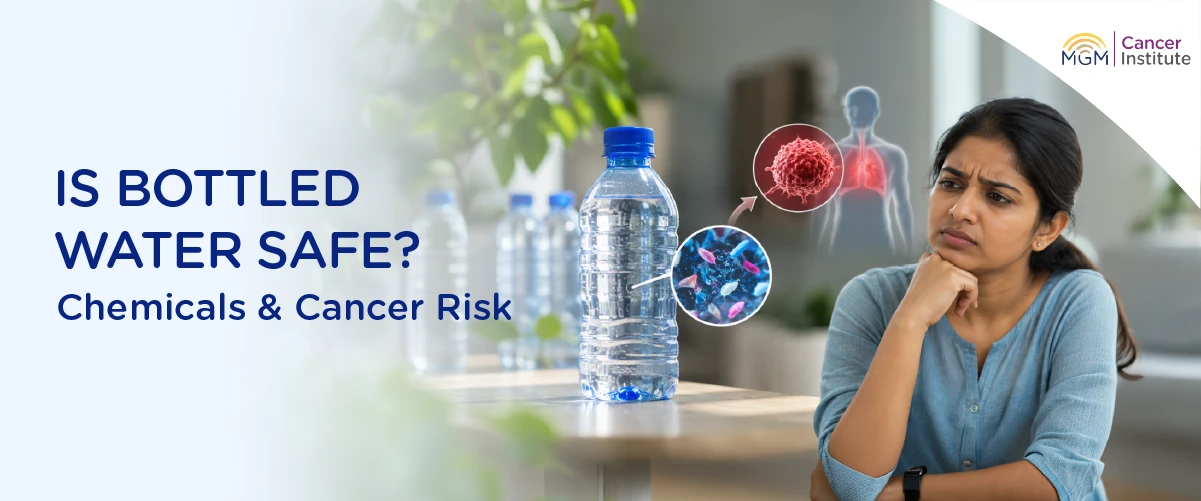
Is Your Bottled Water Safe? Understanding the Chemicals That May Increase Cancer Risk
You probably drink water every day. You may carry water to work, keep bottled water in your car or buy bottled water whenever you are thirsty.
Have you ever wondered whether the water inside a plastic bottle is completely safe?
Can drinking water every day expose you to chemicals that may increase your risk of cancer?
The answer is not necessarily. Bottled water does not directly cause cancer. However, certain harmful substances can enter water through its source, treatment or packaging. Long‑term exposure to some of these substances can increase cancer risk.
Let us understand what these substances are, how they enter water and what you can do to reduce your exposure.
What Are Carcinogens?
Carcinogens are substances that can cause cancer, or increase the risk of cancer developing.
Carcinogens can be found in the air we breathe, the food we eat and even bottled water.
Some carcinogens occur naturally, while others come from pollution, industrial waste and certain chemicals.
When a person is exposed to carcinogens repeatedly over many years, the person’s cells may be damaged. This damage can sometimes lead to cancer.
What Are the Harmful Substances That Can Be Found in Drinking Water?
Not every chemical found in water causes cancer. However, some substances are known to increase cancer risk.
Here are a few substances that are worth understanding.
Arsenic
Arsenic is an occurring substance that can enter groundwater through rocks and soil.
Long‑term exposure to levels of arsenic through bottled water has been linked to:
Arsenic is one of the best‑established cancer‑causing substances found in contaminated bottled water.
Antimony
Antimony is used in the manufacturing of some bottles.
Small amounts may enter water from plastic packaging, especially under certain storage conditions.
Although antimony exposure can affect health, the levels found in manufactured bottled water should not automatically be considered a cancer risk.
Microplastics
Microplastics are pieces of plastic that can enter bottled water from plastic bottles, bottle caps and the surrounding environment.
However, there is currently no evidence that bottled water containing microplastics causes cancer in humans.
Bromate
Bromate can form during water purification processes.
Long‑term exposure to levels may increase cancer risk.
This is why water manufacturers must follow safety limits and regularly test water.
How Can These Substances Lead to Cancer?
This is not the case every time a person is exposed to something dirty or unclean.
The risk is dependent on:-
- The kind of substance.
- How much of it goes into the body.
- The frequency of exposure for a person.
How to Store Water in Bottles?
You do not need to stop drinking water. A few simple habits can help you reduce unnecessary exposure and keep bottled water safe.
- Avoid drinking from bottles that have been left open for a time.
- Once a bottle is opened, dust, dirt and germs can enter if it is left uncovered. Close the cap properly after drinking. Avoid sharing bottled water.
- Do not leave bottled water in a hot car.
- High temperatures may increase the movement of chemicals from plastic into bottled water. Keep water away from direct sunlight and heat.
- Avoid reusing single‑use bottled water.
- Bottles designed for one‑time use may become damaged with repeated washing and handling. Use a reusable bottle instead.
- Check the bottle before drinking.
- Do not use damaged, leaking, or visually deteriorated bottles.
- Buy water from trusted manufacturers.
- Check details of manufacturer, fssai license number, batch number and best before date.
- Store bottled water properly. Follow the manufacturers storage instructions and ensure it is stored in a clean place
Should You Stop Drinking Bottled Water?
No. There is no need to panic or stop drinking water.
Properly manufactured, treated and tested water is generally safe to drink.
The concern is not water itself. It is the possibility of substances entering bottled water and the health effects of long‑term exposure.
Remember, bottled water is essential for your health. The goal is not to not drink bottled water, it is to ensure that the bottled water you are drinking is safe.
Doctor details:
Dr. K. R. Gopi
Senior Consultant
Medical Oncology
Frequently Asked Questions
Yes. Certain bottled water samples may contain contaminants such as arsenic or bromate. However, their presence depends on the water source, treatment process and quality control.
Arsenic can naturally occur in rocks and soil. It may dissolve into groundwater and enter drinking water sources. Long-term exposure to high levels can increase the risk of certain cancers.
Certain chemicals used in plastic manufacturing may migrate into water in small amounts. The extent depends on factors such as the type of plastic, temperature and storage conditions.
Not always. The safety of drinking water depends on its source, treatment, testing and storage. Both bottled and tap water can be safe when they meet the required quality standards.
No. Boiling can kill many disease-causing germs, but it does not reliably remove chemical contaminants such as arsenic. Some contaminants may even become more concentrated as water evaporates.
Store water in clean, tightly closed containers away from direct sunlight and heat. Avoid keeping plastic bottles in cars or near windows where temperatures can rise.
Contact Us
Visiting Hours
OPEN 24 hours 7 days a week.
OPD Timings : Monday to Saturday
( 9:00 AM to 5:30 PM )
Appointments
Visit the hospital
MGM Cancer Institute
No 119 & 121, Nelson Manickam Road, Raajeswari Street, Rajaram Mehta Nagar,
Aminjikarai, Chennai – 600029



At MGM Cancer Institute, we believe in curing the fear of cancer first. We understand that battling cancer is not just a physical fight, but a mental and emotional one as well. Our dedicated team is committed to providing exceptional healthcare that improves your overall well-being and eases the anxiety that comes with cancer. With a 150-bed facility in the heart of your city, we are here to support you every step of the way.
© MGM Cancer Institute. All Rights Reserved. Last updated on 17-06-2026.
Part of MGM HEALTHCARE PRIVATE LIMITED