



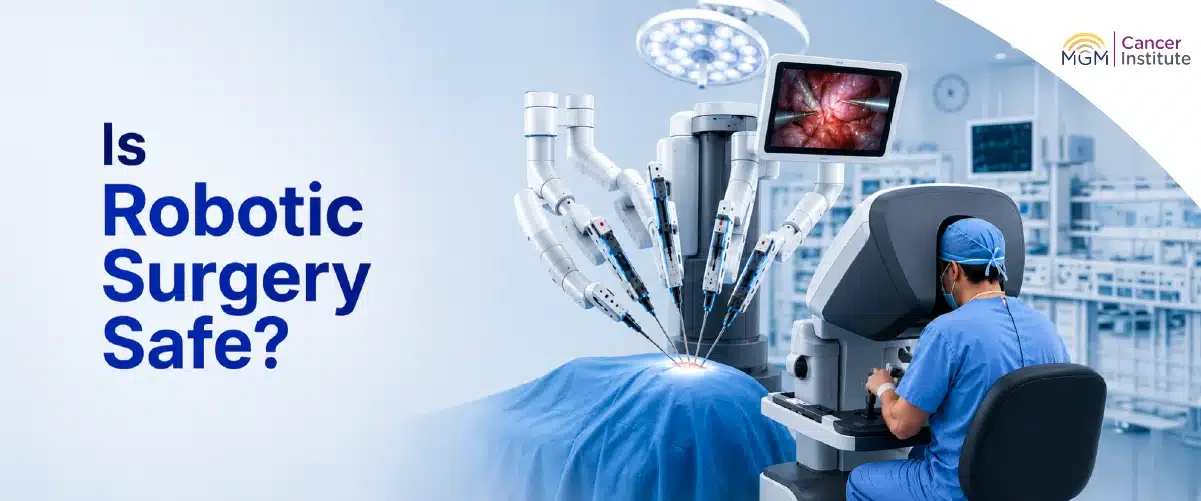
Is Robotic Cancer Surgery Safe? Risks, Benefits & What Patients Should Know
Robotic cancer surgery can be a safe and effective treatment option for carefully selected patients. The robotic system does not perform surgery independently. A trained surgeon controls the system throughout the procedure, making all surgical decisions. Whether robotic surgery is appropriate depends on the type and stage of cancer, its location, the patient’s overall health and the expertise of the surgical team.
The Myth
“Robotic cancer surgery is more dangerous.”
The idea of a robot being involved in cancer surgery can understandably sound frightening. Many people imagine a machine operating independently making decisions without the surgeon’s control. This has led to a misconception that robotic cancer surgery is riskier than traditional open surgery.
Is that really true?
The Fact: The Surgeon Is Always in Control
Cancer surgery is not performed independently by a robot. A skilled doctor is fully in charge of the robot during the whole operation. The doctor makes all the decisions. The doctor stays in control of the time. The robot follows the doctor’s instructions.
The technology acts as a surgical tool translating the surgeons hand movements into precise movements of specialised instruments. The surgeon remains responsible for every decision made during cancer surgery.
Why Is Robotic Surgery Used in Cancer Treatment?
When doctors perform cancer surgery they often have to work close to vital organs, blood vessels and nerves. This can be quite tricky. In some situations using technology can help surgeons reach those tight spots, with much better precision.
Depending on the type and location of the cancer robotic-assisted surgery may offer benefits such as:
- surgical incisions
- Greater precision and control
- Better visualisation of the surgical area
- Less blood loss in appropriately selected procedures
- May help protect nearby healthy tissues in some cases
- Potentially less post‑operative pain
- Smaller scars
- Faster recovery for some patients
However these benefits depend on several factors, including the type and stage of cancer, the patients overall condition and the experience of the surgical team.
What Are the Risks of Robotic Cancer Surgery?
Like any major operation, robotic-assisted cancer surgery carries potential risks.
Possible complications can include:
- Bleeding
- Infection
- Blood clots
- Reactions or complications related to anaesthesia
- Injury to nearby organs, blood vessels or nerves
- Procedure-specific complications
- Temporary or prolonged changes in normal body function
- The need for additional treatment or intervention
Does Robotic Surgery Mean Zero Risk?
No surgery is risk‑free.
Robotic-assisted cancer surgery, like open or laparoscopic surgery can have potential complications. These may include bleeding, infection, reactions to anaesthesia or complications specific to the procedure being performed.
The important question is not whether robotic cancer surgery is completely risk‑free but whether it is the surgical approach for a particular patient.
For some cancers and patients robotic cancer surgery may be an option. For others, open surgery or another treatment approach may be more suitable.
Is Robotic Surgery Always Better Than Open Surgery?
Not always.
Robotic surgery is one option. The right choice depends on the patient and the type of cancer
A good cancer surgeon will recommend cancer surgery only when it is clinically appropriate and when its potential advantages outweigh any limitations.
The focus should always be on achieving the possible cancer outcome, including:
- Complete and appropriate removal of the tumour when surgery is indicated
- Protecting important surrounding structures wherever possible
- Ensuring patient safety
- Supporting a smooth recovery
Which Cancers Can Be Treated With Robotic Surgery?
Robotic-assisted surgery may be an option for selected patients with:
- Prostate cancer
- Kidney cancer
- Colorectal cancer
- Lung cancer
- Uterine and endometrial cancer
- head and neck cancers
Suitability depends on the cancer type, stage, tumour location and the patient’s overall health.
The Real Concern: Choosing the Right Team
The safety of any cancer surgery depends on more than the technology used. Experience, expertise, patient selection, anaesthesia support and comprehensive post‑operative care all play an important role.
Robotic technology can enhance a surgeon’s capabilities. It does not replace the knowledge, judgement and skill of the medical team.
The Bottom Line
Robotic cancer surgery is not automatically more dangerous.
The robot does not operate on its own. It is controlled by a trained surgeon. Is used when it is considered appropriate for the patient’s condition.
Instead of asking, “Is robotic surgery dangerous?” the better question is:
“Is robotic cancer surgery the right option for my cancer?”
The answer should always come after a discussion, with an experienced cancer care team.
DOCTOR DETAILS:
HOD and Senior Consultant
Medical Oncology
FAQs About Robotic Cancer Surgery
Robotic surgery can be a safe option when it is recommended for the right patient and performed by an experienced surgical team.
No. The surgeon controls the robotic system throughout the procedure.
Not always. The best option depends on the type of cancer, its location and the patient’s condition.
In many robotic procedures, smaller cuts may be used compared to traditional open surgery.
Some patients may experience less pain after surgery, but recovery can vary from person to person.
Contact Us
Visiting Hours
OPEN 24 hours 7 days a week.
OPD Timings : Monday to Saturday
( 9:00 AM to 5:30 PM )
Appointments
Visit the hospital
MGM Cancer Institute
No 119 & 121, Nelson Manickam Road, Raajeswari Street, Rajaram Mehta Nagar,
Aminjikarai, Chennai – 600029



At MGM Cancer Institute, we believe in curing the fear of cancer first. We understand that battling cancer is not just a physical fight, but a mental and emotional one as well. Our dedicated team is committed to providing exceptional healthcare that improves your overall well-being and eases the anxiety that comes with cancer. With a 150-bed facility in the heart of your city, we are here to support you every step of the way.
© MGM Cancer Institute. All Rights Reserved. Last updated on 17-06-2026.
Part of MGM HEALTHCARE PRIVATE LIMITED