



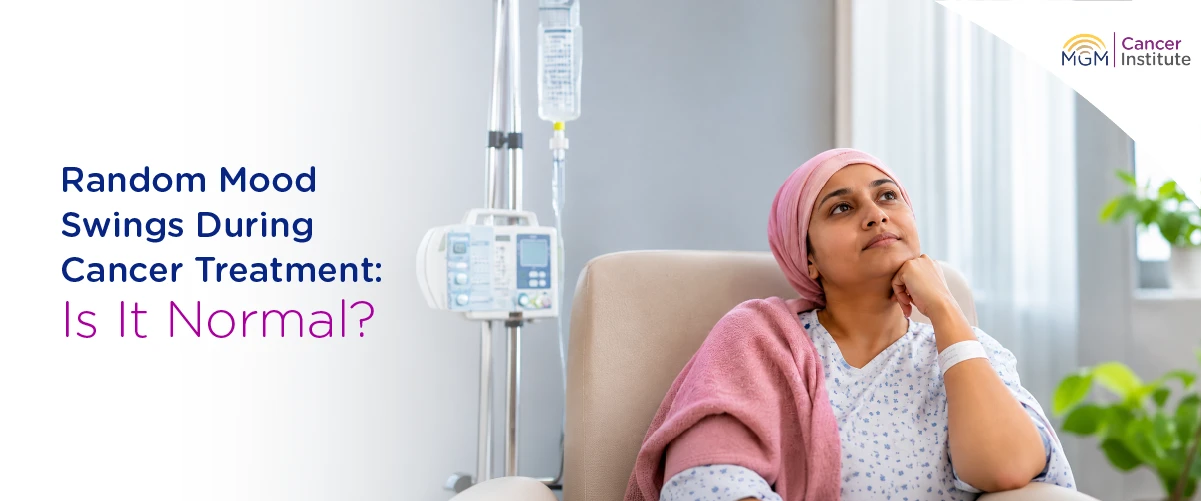
Random Mood Swings During Cancer Treatment: Is It Normal?
One moment you feel fine. The moment you experience a mood swing feeling irritated anxious, emotional or unusually low. Sometimes you may cry without knowing why. Even small things can suddenly feel overwhelming.
If you are undergoing cancer treatment and experiencing mood swings you are not alone.
Cancer treatment affects more than your physical health. Cancer treatment can also influence mood swings, mental well‑being and ability to cope with situations.
Why does this happen?. When should you be concerned?
Let us understand.
Why Do Mood Swings Happen During Cancer Treatment?
There is not always one reason behind changes in mood during cancer treatment. Many factors can contribute.
1. Hormonal Changes
Certain cancer treatments can affect hormone levels in the body. This is particularly common with treatments that affect the ovaries, testes or thyroid function.
For example hormone therapy for breast or prostate cancer may cause fluctuations that lead to:
- Sudden irritability
- Anxiety or low mood
- Difficulty sleeping
- Emotional sensitivity
- Changes in energy levels
2. Chemotherapy and Its Side Effects
Chemotherapy can affect your body in ways, including your energy levels, appetite and sleep patterns.
Some chemotherapy medications, corticosteroids given alongside treatment can also influence mood.
You may experience:
- Feeling unusually restless or anxious
- Irritability
- Difficulty sleeping
3. The Emotional Stress of a Cancer Diagnosis
A cancer diagnosis can bring emotions at once.
You may worry about treatment outcomes, your family, finances, work or what the future holds.
Even when treatment is progressing well uncertainty can sometimes make you feel overwhelmed.
These emotional responses are understandable. Do not mean you are failing to cope.
4. Fatigue and Lack of Sleep
Cancer‑related fatigue is different from tiredness. It can persist after adequate rest.
When you are physically exhausted or struggling to sleep it can become harder to manage emotions.
You may notice that you:
- Get irritated easily.
- Feeling emotionally down.
- feel impatient.
5. Changes in Your Daily Routine
Yes, Cancer treatment can change your life.
Frequent hospital visits, change in appetite, reduced physical activity, time away from work and dependence on family members all impact on your sense of independence.
These changes can lead to frustration, sadness, or emotional stress.
Is It the Treatment or Something
Not every mood change during cancer treatment is directly caused by cancer medication.
Other factors, including anaemia, infections, dehydration, thyroid problems, pain and certain medications can also affect how you feel emotionally.
This is why it is important to discuss sudden changes in mood with your treating doctor rather than assuming they are simply part of treatment.
When Should You Speak to Your Doctor?
Occasional emotional ups and downs can happen during cancer treatment. However certain changes deserve attention.
Speak to your healthcare team if you experience:
- sadness or loss of interest in activities.
- Regular anxiety or panic attacks.
- Major changes in sleep.
- Difficulty managing activities.
- Feeling emotionally overwhelmed most of the time.
If you experience thoughts of harming yourself seek professional help.
Your doctor may assess treatment‑related causes and recommend appropriate support, including counselling or mental health care.
Ways to Manage Mood Swings During Cancer Treatment
While you may not be able to control every change a few small steps can help.
1. Talk about how you feel
Share your emotions with someone you trust. You do not have to be positive all the time.
2. Maintain a sleep routine
Try to follow consistent sleep and wake‑up times. Inform your doctor if sleep disturbances persist.
3. Eat regularly. Stay hydrated
Treatment‑related changes in appetite can affect your energy levels. Try frequent meals if eating full meals feels difficult.
At the MGM Cancer Institute, we understand that cancer treatment is more than the physical symptoms.
If you are experiencing mood swings, anxiety, persistent sadness or difficulties coping during cancer treatment, our multi-disciplinary team can assist in identifying potential causes and direct you toward appropriate support.
Doctor details:
Suhasini
Pyscho-Oncologist
Frequently Asked Questions
Yes. Mood swings can occur during cancer treatment due to hormonal changes, chemotherapy side effects, medications, fatigue, sleep disturbances and emotional stress. However, persistent or severe mood changes should be discussed with your doctor.
Chemotherapy can indirectly contribute to mood changes through fatigue, sleep disturbances and other side effects. Certain medications given alongside chemotherapy, particularly corticosteroids, can also affect mood.
Yes. Hormone therapy for breast or prostate cancer can cause hormonal changes that may contribute to irritability, anxiety, low mood and sleep disturbances.
The duration varies from person to person. Some people experience temporary mood changes, while others may have symptoms throughout treatment. The duration depends on the treatment, medications and individual circumstances.
No. Never stop or change your cancer medication without consulting your treating doctor. Your healthcare team can assess whether the symptoms are medication-related and discuss suitable alternatives or supportive care.
Contact Us
Visiting Hours
OPEN 24 hours 7 days a week.
OPD Timings : Monday to Saturday
( 9:00 AM to 5:30 PM )
Appointments
Visit the hospital
MGM Cancer Institute
No 119 & 121, Nelson Manickam Road, Raajeswari Street, Rajaram Mehta Nagar,
Aminjikarai, Chennai – 600029



At MGM Cancer Institute, we believe in curing the fear of cancer first. We understand that battling cancer is not just a physical fight, but a mental and emotional one as well. Our dedicated team is committed to providing exceptional healthcare that improves your overall well-being and eases the anxiety that comes with cancer. With a 150-bed facility in the heart of your city, we are here to support you every step of the way.
© MGM Cancer Institute. All Rights Reserved. Last updated on 17-06-2026.
Part of MGM HEALTHCARE PRIVATE LIMITED