



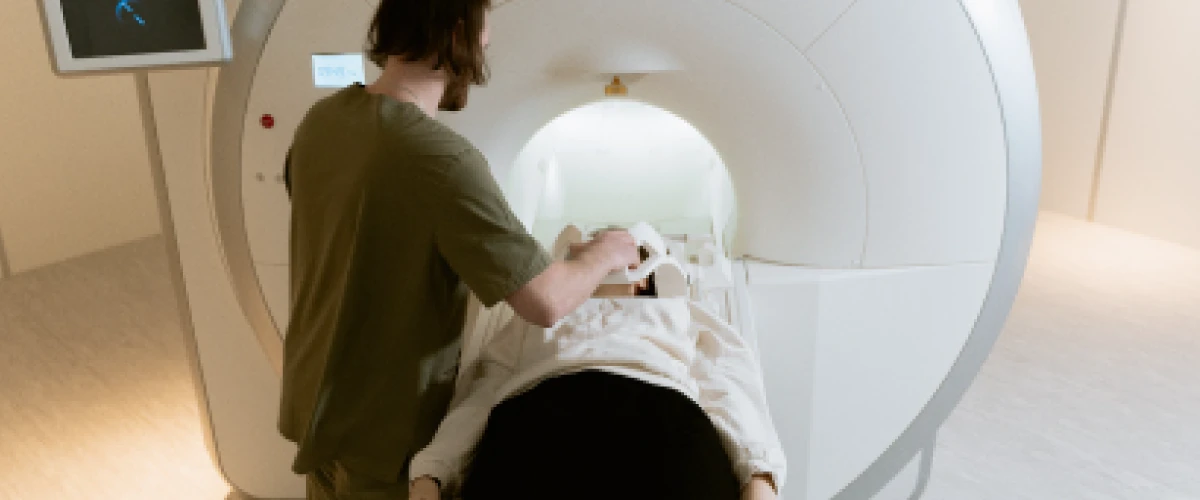
SPECT Scan for Cancer Diagnosis: Uses, Cost in India, Accuracy And Procedure
As cancer diagnosis and treatment continue to evolve, SPECT (Single Photon Emission Computed Tomography) scan has emerged as an advanced imaging technique that helps in the detection and management of cancer. This diagnostic tool uses radioactive tracers to create 3D images of the internal organs and tissues, providing detailed information about the metabolic activity and blood flow. Here’s all you need to know about a SPECT scan and how it helps in cancer diagnosis.
What is a SPECT scan?
A SPECT scan (Single Photon Emission Computed Tomography) is an advanced nuclear imaging test that uses a small amount of radioactive tracer to create 3D images of how organs function. It is widely used in cancer diagnosis to detect abnormal activity, identify tumor spread, and monitor treatment response, especially in advanced cancer centers in Chennai. A single photon emission computed tomography (SPECT) scan is an imaging test that shows how blood flows into and within tissues and organs.
How does a SPECT scan work?
During a SPECT scan, a patient is injected with a radioactive tracer that travels through the bloodstream and accumulates in the organ or tissue of interest. The scanner detects the radiation emitted by the tracer and uses it to create detailed 3D images of the organ or tissue. SPECT scan can detect the changes in blood flow and metabolic activity, which can help in identifying cancerous cells.
SPECT Scan Procedure: Step-by-Step
- Tracer Injection – A small amount of radioactive material is injected into the bloodstream
- Waiting Period – The tracer travels to the target organ
- Imaging Scan – A special camera captures 3D images
- Analysis – Doctors interpret the results
The scan is painless, non-invasive, and usually takes 30–60 minutes.
Why is a SPECT scan used in cancer diagnosis?
A SPECT scan is an important diagnostic tool in cancer diagnosis as it helps in identifying the location and extent of cancerous cells. It can also be used to detect cancer recurrence and assess the effectiveness of cancer treatment. SPECT scan is particularly useful in the diagnosis of bone cancer, lung cancer, brain cancer, and liver cancer.
Cost of SPECT Scan in India
The cost of a SPECT scan in India ranges from ₹8,000 to ₹25,000, depending on the hospital and scan type. It is a cost-effective alternative to PET scans for cancer diagnosis.
What to expect during a SPECT scan?
A SPECT scan is a non-invasive and painless procedure that typically takes around 30-60 minutes to complete. The radioactive tracer is injected into a vein in the arm, and the patient is asked to lie down on a table. The scanner rotates around the patient’s body and takes images from different angles. The patient may need to stay still and hold their breath for a few seconds during the scan. The radiation exposure during a SPECT scan is minimal and considered safe.
What are the risks associated with a SPECT scan?
A SPECT scan is a safe and low-risk procedure, and the benefits of the scan outweigh the risks. The amount of radiation used in a SPECT scan is relatively low, and the risk of any adverse reactions to the tracer is very rare.
Summing up, SPECT scan is an advanced imaging technique that helps in cancer diagnosis by detecting changes in blood flow and metabolic activity in the body. It is a safe and painless procedure that provides valuable information about the location and extent of cancerous cells. If you suspect any cancer-related symptoms, consult a doctor and get a SPECT scan done to diagnose the condition accurately.
Frequently Asked Questions
SPECT imaging (Single Photon Emission Computed Tomography) is a nuclear medicine scan that uses a radioactive tracer to create 3D images of organs. It shows blood flow and tissue activity, helping in cancer detection and monitoring.
SPECT scans are used to detect and stage cancer, identify bone metastasis, assess brain and heart function, and monitor treatment response.
Yes, SPECT/CT imaging is safe for most patients. Although it involves slightly more radiation than a standard SPECT scan, the levels are still within safe medical limits. The scan is non-invasive, and complications are extremely rare.
Yes, a SPECT scan involves low-level radiation exposure from the tracer. However, the dose is minimal and considered safe for most patients.
The radioactive tracer usually leaves the body within 24 to 48 hours through urine or stool.
Contact Us
Visiting Hours
OPEN 24 hours 7 days a week.
OPD Timings : Monday to Saturday
( 9:00 AM to 5:30 PM )
Appointments
Visit the hospital
MGM Cancer Institute
No 119 & 121, Nelson Manickam Road, Raajeswari Street, Rajaram Mehta Nagar,
Aminjikarai, Chennai – 600029



At MGM Cancer Institute, we believe in curing the fear of cancer first. We understand that battling cancer is not just a physical fight, but a mental and emotional one as well. Our dedicated team is committed to providing exceptional healthcare that improves your overall well-being and eases the anxiety that comes with cancer. With a 150-bed facility in the heart of your city, we are here to support you every step of the way.
© MGM Cancer Institute. All Rights Reserved. Last updated on 17-06-2026.