



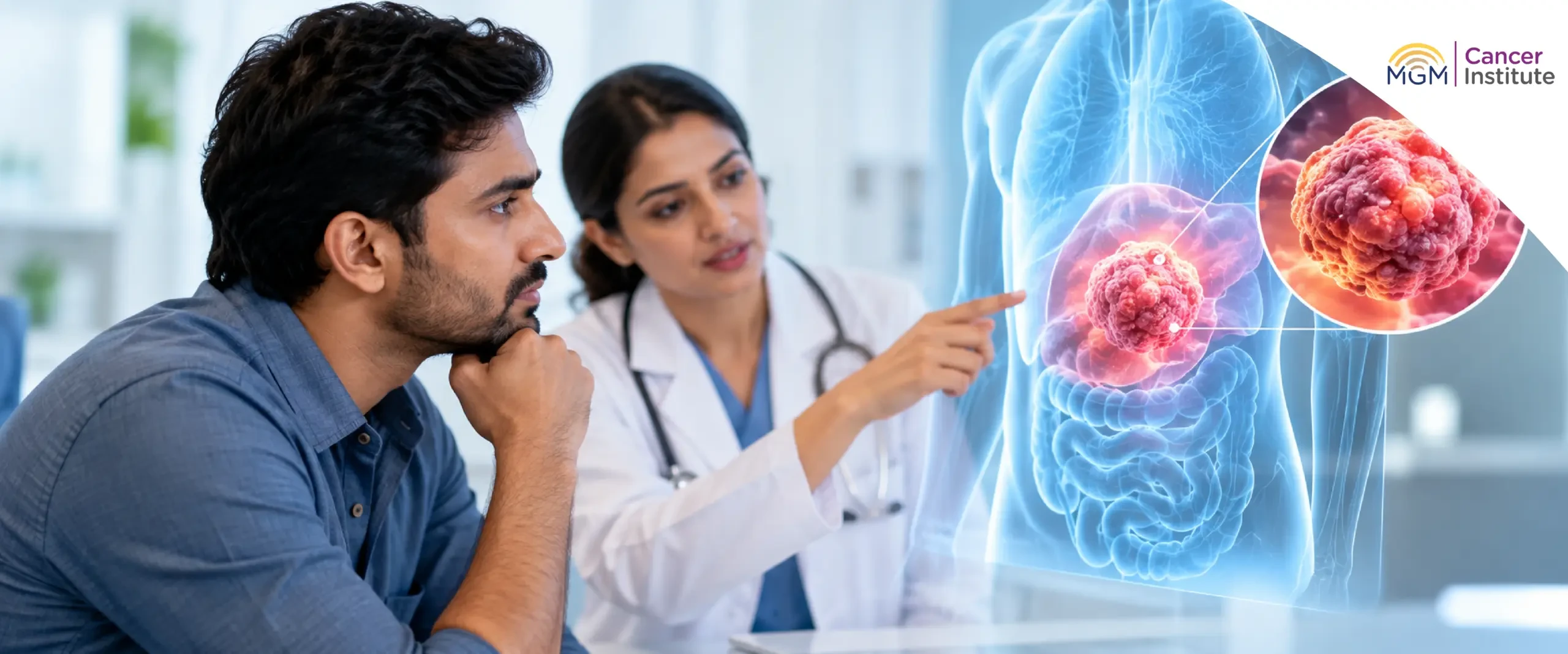
What Is a Tumour? Types, Causes and When to See a Doctor
Hearing the word tumour can be worrying.
But a tumour does not always mean cancer.
A tumour is a development of cells in the body. Some tumours are harmless while others can be cancerous.
Knowing the difference can help you understand when a tumour needs attention.
What is a tumour?
Normally cells grow, divide and die in a controlled way.
Sometimes cells grow more than they should or do not die when they are supposed to. This can lead to a mass or lump called a tumour.
Tumours can develop in parts of the body including the:
Not every tumour is cancer.
What are the main types of tumours?
Tumours are broadly divided into two types.
1. Benign tumours
Benign means not cancerous.
These tumours usually grow slowly. Do not spread to other parts of the body.
Some benign tumours may not cause any problems. May only need regular monitoring.
However a benign tumour may still need treatment if it becomes large causes pain or presses on an organ.
2. Malignant tumours
Malignant tumours are cancerous.
They can grow into tissues and may spread to other parts of the body.
Malignant tumours need evaluation and treatment.
What causes a tumour?
There is usually no reason why a tumour develops.
Changes in the bodys cells can cause them to grow in a way.
Some factors may increase the chance of developing tumours such as:
- Age
- Family history
- Certain inherited gene changes
- Tobacco use
- Alcohol use
- Exposure to radiation
- Some infections
- Long-term exposure to certain harmful substances
- Being overweight or having obesity
However having one of these risk factors does not mean you will develop a tumour.
Some tumours can also occur in people who have no known risk factors.
What are the symptoms of a tumour?
The symptoms depend on where the tumour develops and how large it’s
Some tumours may cause no symptoms all.
Possible signs can include:
- A new lump or swelling
- weight loss
- Ongoing tiredness
- Pain that does not go away
- Changes in bowel or bladder habits
- Unusual bleeding
- A cough that does not improve
- Changes in a mole or skin growth
- Repeated headaches or changes in vision
- Difficulty swallowing
These symptoms can happen for many reasons and do not automatically mean cancer.
If a symptom is new, unusual or does not go away it is worth getting checked.
When should you see a doctor?
You should speak to a doctor if you notice:
1. A lump
Especially if it continues to grow. Does not go away.
2. Unreasonable weight loss
Losing weight without changing your diet or activity should be checked.
3. Constant pain
Pain that keeps coming or does not improve should not be ignored.
4. Unusual bleeding
Bleeding that’s unexpected or unusual for you needs medical attention.
5. Changes that continue
Any change in your body that lasts for several weeks should be discussed with a doctor.
How is a tumour diagnosed?
A doctor may first ask about your symptoms. Examine the affected area.
Depending on what they find you may need tests such as:
- Blood tests
- Ultrasound
- X-ray
- CT scan
- MRI
- Mammogram
- Endoscopy
- Biopsy
A biopsy involves taking a sample of tissue so it can be examined under a microscope.
Not every tumour needs the tests. Your doctor will decide what is needed based on your symptoms and the part of the body involved.
Can tumours be prevented?
Not all tumours can be prevented.
However healthy habits can reduce the risk of some cancers.
You can:
- Avoid tobacco
- Limit alcohol
- Stay active
- Eat a balanced diet
- Maintain a weight
- Protect your skin from too much sunlight
- Get recommended vaccinations
- Follow age and risk-based cancer screening
- Know your family history
Most importantly do not ignore changes in your body.
Tumour does not always mean cancer
Finding a lump or hearing the word tumour can be frightening.
Remember, not every tumour is cancerous.
The only way to understand what a tumour is and whether it needs treatment is through medical evaluation.
If you notice a lump unexplained symptoms or a change that does not go away speak to a doctor rather than trying to diagnose it yourself.
Your health deserves attention
At MGM Cancer Institute our multidisciplinary team brings together specialists across cancer care to evaluate symptoms, diagnose tumours and plan treatment based on each patients condition.
From screening and diagnosis to surgery, treatment and supportive care we focus on helping patients understand their condition and make informed decisions about their care.
If you notice a change, in your body that concerns you do not wait. Talk to a doctor.
DOCTOR DETAILS:
Dr. Sivaram Ganesamoni
HOD and Senior Consultant
Surgical Oncology
Frequently Asked Questions
No. Tumours can be benign (non-cancerous) or malignant (cancerous). A doctor may recommend tests to understand what type of tumour it is.
Yes. Some benign tumours may not cause any symptoms or health problems. However, they may need treatment if they grow, cause pain or press on nearby organs.
No. Some tumours may not cause any symptoms, especially when they are small. Symptoms can depend on where the tumour develops and how large it becomes.
Some lumps or growths may go away on their own, but this depends on what is causing them. A new or persistent lump should be checked by a doctor rather than assumed to be a tumour or ignored.
Doctors may use scans, blood tests or other tests to assess a tumour. In some cases, a biopsy may be needed to examine a tissue sample under a microscope and determine whether cancer cells are present.
Contact Us
Visiting Hours
OPEN 24 hours 7 days a week.
OPD Timings : Monday to Saturday
( 9:00 AM to 5:30 PM )
Appointments
Visit the hospital
MGM Cancer Institute
No 119 & 121, Nelson Manickam Road, Raajeswari Street, Rajaram Mehta Nagar,
Aminjikarai, Chennai – 600029



At MGM Cancer Institute, we believe in curing the fear of cancer first. We understand that battling cancer is not just a physical fight, but a mental and emotional one as well. Our dedicated team is committed to providing exceptional healthcare that improves your overall well-being and eases the anxiety that comes with cancer. With a 150-bed facility in the heart of your city, we are here to support you every step of the way.
© MGM Cancer Institute. All Rights Reserved. Last updated on 17-06-2026.
Part of MGM HEALTHCARE PRIVATE LIMITED