



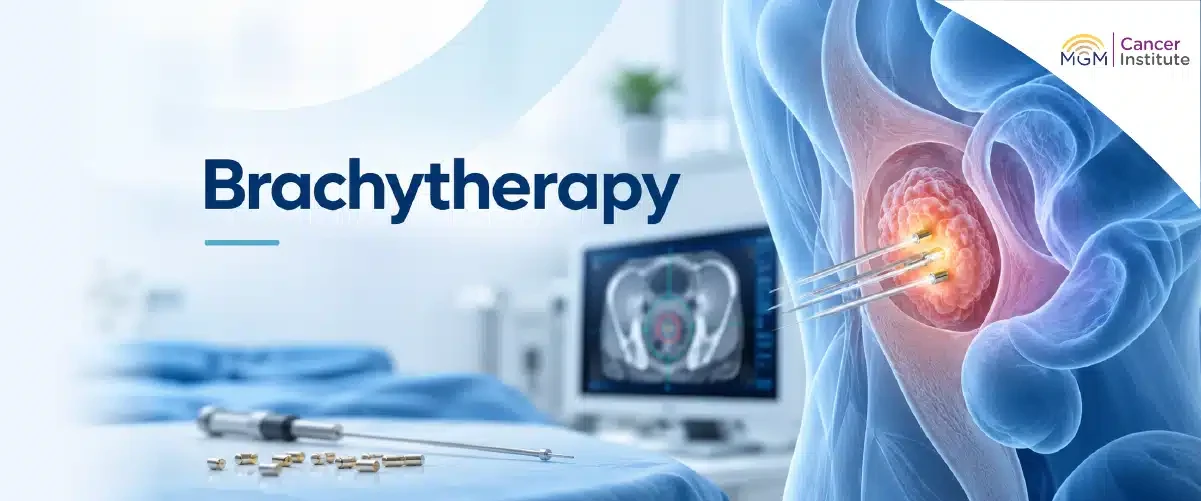
What Is Brachytherapy? A Simple Guide to This Targeted Cancer Treatment
Radiation therapy does not always mean radiation from outside the body.
Sometimes the radiation comes from inside or very close to the cancer.
This is called brachytherapy.
It is a form of radiation therapy used to deliver a high dose of radiation directly to or near a tumour while limiting exposure to surrounding healthy tissues.
What Is Brachytherapy?
Brachytherapy is a type of radiation therapy where radiation is given towards the tumour from a machine outside the body doctors place a small radioactive source inside the body or very close to the area being treated.
The radioactive source delivers radiation to the tumour over a planned period.
Once the treatment is complete the source is removed in types of brachytherapy.
Radiation is brought closer to the cancer instead of travelling from outside the body.
How Does Brachytherapy Work?
Brachytherapy is carefully planned by a team of cancer specialists.
Depending on the type and location of cancer the radioactive source may be placed:
- Inside a body cavity
- Into or next to the tumour
The placement is guided by the treatment plan. When appropriate imaging techniques.
The aim is to deliver a dose of radiation to the cancer while reducing radiation exposure to nearby healthy tissues.
What Cancers Can Be Treated With Brachytherapy?
Brachytherapy is used for types of cancer.
It is well established in the treatment of:
Is Brachytherapy Painful?
The experience can vary depending on where the radioactive source needs to be placed. The technique being used.
Doctors may use regional anaesthesia, sedation or general anaesthesia depending on the procedure.
Some patients may experience discomfort or temporary side effects after treatment.
Your radiation oncology team will explain what to expect before the procedure.
Is Brachytherapy Safe?
Brachytherapy is a planned cancer treatment.
The radiation dose, treatment duration and position of the source are calculated specifically for the patient.
Modern treatment planning and imaging can help doctors place the radiation source accurately and deliver the intended dose to the treatment area.
Like cancer treatments brachytherapy can have side effects.
These depend largely on the area being treated, the dose and whether other treatments such as chemotherapy or external beam radiation therapy are also being given.
What Are the Side Effects of Brachytherapy?
- Possible effects may include:
- Fatigue
- Temporary discomfort
- Skin or tissue irritation
- Bleeding or soreness in the treated area
- Changes in bowel or bladder function when the pelvic region is treated
- reproductive health effects in some patients
Your doctor will discuss the side effects that are specific to your treatment before therapy begins.
Does Brachytherapy Make You Radioactive?
This is one of the common concerns.
It depends on the type of brachytherapy used.
With brachytherapy the radioactive source is removed after treatment. Once it has been removed there is no source remaining inside the body.
Your treatment team will provide safety instructions based on the type of brachytherapy you receive.
How Long Does Brachytherapy Take?
The treatment schedule varies.
The duration also depends on the cancer being treated, the technique used and the overall treatment plan.
Your radiation oncologist will explain your treatment schedule before you begin.
Your radiation oncology team will assess these factors and recommend the most appropriate treatment approach.
The Bottom Line
Brachytherapy is radiation therapy delivered from inside or close to the cancer.
It allows radiation oncologists to deliver a dose to a specific treatment area and can play an important role in the management of several cancers.
If brachytherapy has been recommended for you, ask your radiation oncologist about the type of procedure, expected benefits, possible side effects and what you can expect during treatment.
Understanding your treatment can make the cancer journey feel a little less uncertain.
DOCTOR DETAILS:
Dr. Prahlad Yathiraj
Clinical Lead and Senior Consultant
Radiation Oncology
Frequently Asked Questions
Brachytherapy is a type of internal radiation therapy. A radioactive source is placed inside the body, in the tumour, or close to it, to treat a specific area.
External radiation therapy delivers radiation from a machine outside the body. Brachytherapy places the radiation source inside or near the cancer.
Brachytherapy may be used for cancers such as cervical cancer, prostate cancer, breast cancer, head and neck cancers, and certain eye cancers. Its suitability depends on the cancer type, location, stage, and overall treatment plan.
The source may be placed through a thin tube called a catheter or a device called an applicator. It may be positioned inside a body cavity, directly in the tumour, or in tissue close to the cancer.
Both options are possible. In temporary brachytherapy, the radioactive source is removed after treatment. In permanent implant brachytherapy, tiny radioactive seeds remain in the body and gradually lose their radioactivity over time.
Contact Us
Visiting Hours
OPEN 24 hours 7 days a week.
OPD Timings : Monday to Saturday
( 9:00 AM to 5:30 PM )
Appointments
Visit the hospital
MGM Cancer Institute
No 119 & 121, Nelson Manickam Road, Raajeswari Street, Rajaram Mehta Nagar,
Aminjikarai, Chennai – 600029



At MGM Cancer Institute, we believe in curing the fear of cancer first. We understand that battling cancer is not just a physical fight, but a mental and emotional one as well. Our dedicated team is committed to providing exceptional healthcare that improves your overall well-being and eases the anxiety that comes with cancer. With a 150-bed facility in the heart of your city, we are here to support you every step of the way.
© MGM Cancer Institute. All Rights Reserved. Last updated on 17-06-2026.
Part of MGM HEALTHCARE PRIVATE LIMITED